How the Sedition Act Threatened (and Then Saved) the First Amendment
By Charles Slack, Stephen D. Solomon, and the staff of First Amendment Watch
The Sedition Act of 1798 was the first great test of the First Amendment’s protection for the freedom of speech and press. Under the new law, Americans could face up to $2,000 in fines (nearly $42,000 in 2020 dollars) and two years in prison for criticizing a public official. Passed only seven years after the ratification of the Bill of Rights, the Sedition Act forced the young country to decide not just whether it was truly dedicated to freedom of speech, but also what that idea would even mean in a democratic republic.
Objectives
- Describe the social and political tensions that led to the Sedition Act of 1798.
- Learn how to compare competing early interpretations of free speech in the 18th century.
- Connect expansive protections for free speech to the philosophical foundations of a republican democracy.
- Apply the lessons learned during the Sedition Act crisis to the free speech issues dividing Americans today.
Contents
FIRST AMENDMENT WATCH AT NEW YORK UNIVERSITY documents threats to constitutionally protected freedoms of speech, press, assembly, and petition—rights that are critical to self-governance.
- Introduction
- What Does “Freedom of Speech and Press” Mean, Anyway?
- The Role of the Judiciary in Protecting Free Speech
- James Madison’s Defense of the Free Press
- Why the Defense of Truth Proved Ineffective
- Efforts to Curb Dissent Backfires
- The Legacy of the Sedition Act
- Resources
- Glossary
Note: The lead-in paragraph of the teacher guide, updated March 2023, corrects that the Sedition Act of 1798 was passed seven years after the ratification of the Bill of Rights.
In addition to using our guides in your classroom, you may be interested in inviting an expert to talk to your students about the law and its contemporary implications. Reach out to us firstamendmentwatch@nyu.edu about scheduling an appearance with our founding editor Stephen D. Solomon.
Solomon is the Interim Director of the Arthur L. Carter Journalism Institute, where he also teaches First Amendment law. His most recent book, Revolutionary Dissent: How the Founding Generation Created the Freedom of Speech (St. Martin’s Press, 2016), explored the birth of freedom of expression in America’s founding period.
Introduction
When the United States ratified the First Amendment to the Constitution in 1791, it was not clear what the country’s commitment to free expression would mean in practice. The republic was less than two decades old, and its leaders had not yet faced the kind of social and political pressures that tempt governments to censor dissidents. This changed quickly. A combination of internal and external factors led the country’s second President, John Adams, to pass the Alien and Sedition Acts, which limited some of the very rights the Constitution and Bill of Rights had promised to protect.
In the years leading up to the Sedition Act, the United States had split into two parties, with conflicting views of how the country should be governed. The Federalists controlled the presidency, both houses of Congress, and the Supreme Court. They believed in the importance of a strong federal government to direct the destiny of the young country. By contrast, the Democratic-Republicans, also known as Republicans, were deeply suspicious of a large, centralized government, and emphasized the importance of individual freedoms.
In 1794, the country entered a trade agreement with Britain that broke an earlier treaty with France. The Federalists, who were nervous about the influence of the French Revolution, thought the prudent thing to do was to normalize relations with the British. In retaliation, the French began attacking American commercial ships. Between October 1796 and June 1797, the French privateers captured 316 ships, or roughly 6% of the American merchant fleet. In May 1798, after news that a U.S. diplomatic mission to France had failed, many Federalists called for a full-out war.
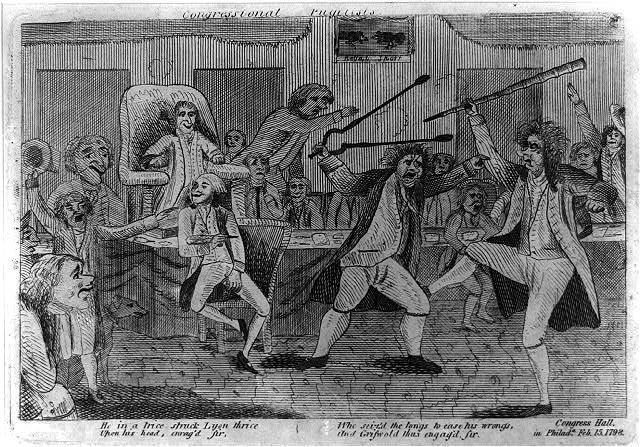
Representatives Matthew Lyon of Vermont and Roger Griswold of Connecticut fight with cane and fire tongs on the floor of Congress in 1798. Lyon, an immigrant from Ireland, will be the first convicted under the Sedition Act. Library of Congress.

U.S. marine ships capture a French privateer in Puerto Plata Harbor, Santo Domingo. May 11, 1800. Copy of a painting by Philip Colprit 1960. U.S. National Archives.
Tensions with France added to the already heated political divisions in the United States, bringing the country into a state of crisis. The Federalists grew worried that immigrants from France were bringing dangerous ideas about anarchy with them, while Republicans accused Federalists of plotting to reinstate a British-style monarchy.
Acrimony at times turned violent. In 1798, a Federalist congressman used his cane to strike a Republican colleague on the House floor. That same year, hundreds of men attempted to burn the home of a prominent critic of President Adams. Indeed, much of the ire fell on Republican printers for decreasing public trust in the ruling party. Federalists accused Republican newspapers of spreading misinformation and endangering the country by turning the public against its leaders. Even President Adams, who had once been a fierce defender of the free press, began to see vitriolic criticism as a threat to peace and order.
In 1798, the Federalist party used their consolidated power to pass four new laws aimed at curbing dissent. The Naturalization Act raised residency requirements for citizenship from 5 to 14 years. The Alien Friends Act and Alien Enemies Act denied immigrants the right to a fair hearing, and gave the President authority to arrest and deport immigrants for suspicious behavior. The fourth law, the Sedition Act, was unique in that it was directed at citizens. Under this last law, citizens could face jail time for writing or speaking critically of the government.
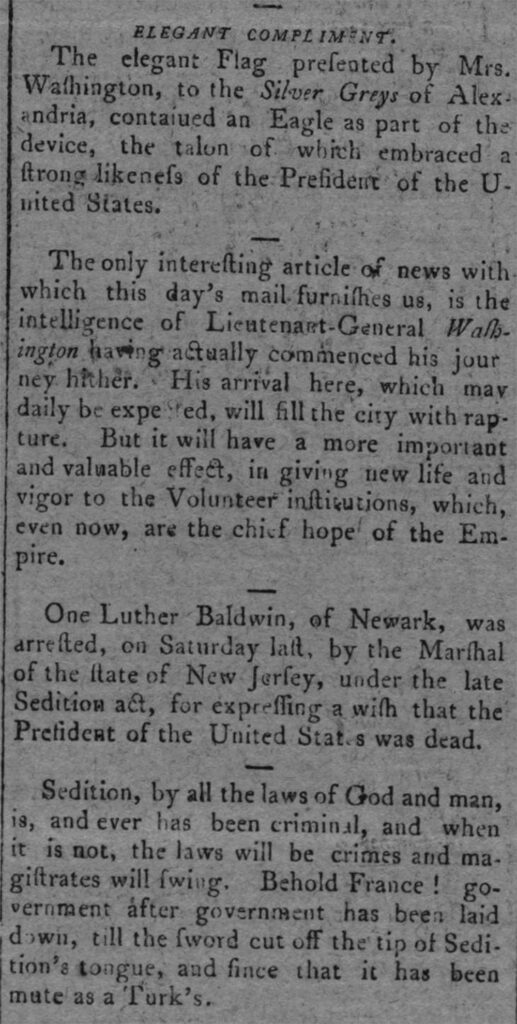
“Sedition, by all the laws of God and man, is, and ever has been criminal, and when it is not, the laws will be crimes and magistrates will swing.” Philadelphia Daily Advertiser, November 8, 1798. Library of Congress, Chronicling America.
The Sedition Act was designed to suppress opposition speech. It prohibited criticism of the Federalist President Adams and both houses of Congress, each controlled by the Federalist party, but said nothing about the office of the Vice President, held then by Thomas Jefferson, who was a Republican. Its baldly political motive was also reflected in a sunset provision built into the law—it would expire on the first day of the next presidential term, just in case the Federalists lost. The law also skewed elections in favor of Federalist officeholders by criminalizing some of the critical speech that could otherwise be employed against them.
Between 1791 and 1800, more than two dozen individuals were prosecuted under the sedition law, many of whom were editors of Republican publications, and all of whom opposed President Adams. The Sedition Act lasted just a little more than two years, but its fallout would endure for centuries. It led to James Madison’s historic defense of the free press, which would inspire democratic leaders both within and outside the United States to adopt wide protections for speech.
The First Amendment vs. the Sedition Act
THE FIRST AMENDMENT RATIFIED 1791
CONGRESS SHALL MAKE NO LAW respecting an establishment of religion, or prohibiting the free exercise thereof; or ABRIDGING THE FREEDOM OF SPEECH, OR OF THE PRESS; or the right of the people peaceably to assemble, and to petition the government for a redress of grievances.
THE SEDITION ACT OF 1798
If any person shall WRITE, PRINT, UTTER, OR PUBLISH, or shall cause or procure to be written, printed, uttered, or published … any FALSE, SCANDALOUS AND MALICIOUS WRITING OR WRITINGS against the government of the United States, or either house of the Congress of the United States, or the president of the United States … then such person… shall be PUNISHED BY A FINE NOT EXCEEDING TWO THOUSAND DOLLARS, AND BY IMPRISONMENT NOT EXCEEDING TWO YEARS.
What Does “Freedom of Speech and Press” Mean, Anyway?
These 14 words strike modern eyes as clear and unequivocal: “Congress shall make no law … abridging the freedom of speech, or of the press.”
Today, we take for granted our right to express just about any opinion about elected officials without fear of penalty. But in the early days of the republic, the actual rights implied by those words were not yet clearly articulated. The founders wrote and adopted the First Amendment with little historical precedent telling them what it would actually mean to run a country whose citizens enjoyed the broadest freedom to speak their mind. Prior to the American Revolution, colonists’ understanding of freedom of speech was largely shaped by five centuries of English law.
England had a long history of government censorship that colonists inherited. Back in 1275, the English Parliament passed a seditious libel law that made it a crime to circulate “any false news or tales whereby discord . . . may grow between the king and his people.” In the 16th century, when the printing press made it easier to circulate opposition materials, King Henry VIII instituted a licensing system so that he could censor manuscripts before their publication. The licensing system gave the government an all-encompassing control of the press: pre-publication censorship and post-publication punishment.
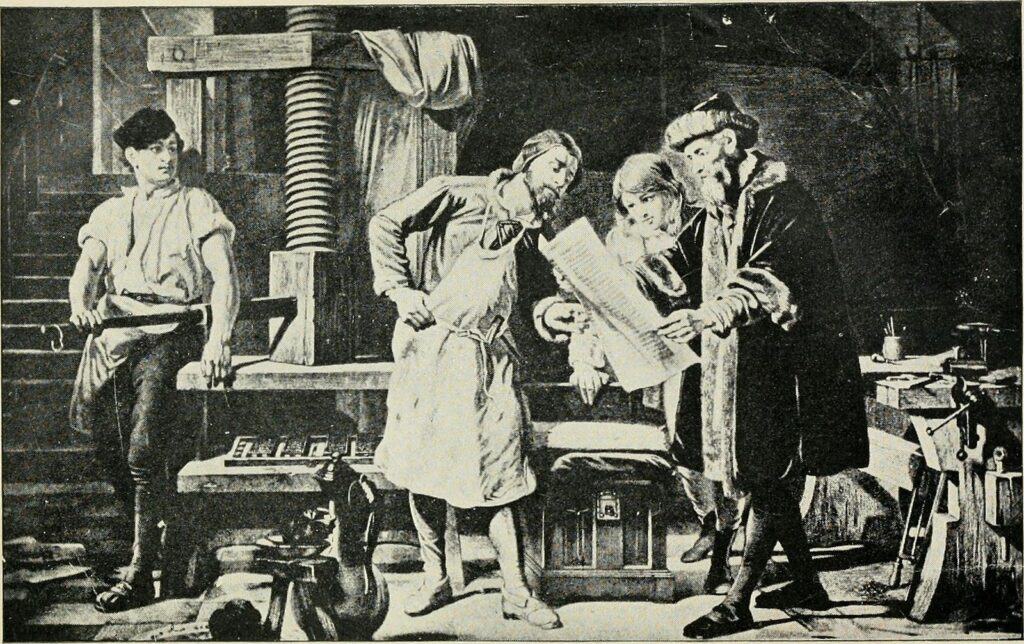
A German goldsmith named Johannes Gutenberg invented the printing press around 1440. The invention dramatically increased the circulation of printed materials, including dissident texts. This is a 1904 rendition of Gutenberg taken from “Printing and Writing Materials” by Adele Millicent Smith. Wikimedia Commons / University of California Libraries
In 1694, Parliament allowed the licensing laws to expire in order to exploit the commercial promise of the printing press. But seditious libel laws remained. So by the 18th century, freedom of the press in England meant only the freedom from prior censorship of publication—what we today call prior restraints—not freedom from post-publication punishment. This was the conception of freedom of the press that came ashore in the English colonies.
Drawing from this more narrow vision of free expression, Federalists argued that the Sedition Act did not abridge First Amendment rights, because though it enabled the government to punish individuals for published speech, people were still free from pre-publication censorship. If anything, they argued, their law was especially enlightened because it included a special provision allowing the accused to defend themselves by proving the truth of their writings. In Britain, the proof of truth offered no protection from charges of seditious libel.
Critics of the Alien and Sedition Acts, including James Madison and Thomas Jefferson, began a rethinking of the protections for speech and press that were necessary for the new republican form of government established in America. They argued that a democratic government required a far more expansive definition of freedom of speech than the Federalists envisioned. Although Republicans may have lacked the legislative power to stop the law from going into effect, it was their vision of free speech that would eventually win out in the long term.
Activity—Using Primary Documents
For five days, from July 5-10, 1798, the House of Representatives (5th Congress, Second Session) devoted itself to an intensive debate over the Federalists’ proposed Sedition Act. Recorded by 16th-century journalists, it offers an invaluable record of the various arguments for and against the law.
- The full debate is available online through the Annals of Congress, available from the Library of Congress. Under the heading “Punishment of Crime,” the debate starts on page 2093 and runs through page 2172.
- Ask your students to read the debate and learn some of the key arguments in favor of the law, from Federalists such as John Allen, Samuel Dana, George Thatcher, and others; and arguments against the law, from Republicans such as Edward Livingston, Albert Gallatin, and Nathaniel Macon.
- Have them write an essay summarizing the most persuasive arguments from both sides. What surprised them most?
The Role of the Judiciary in Protecting Free Speech
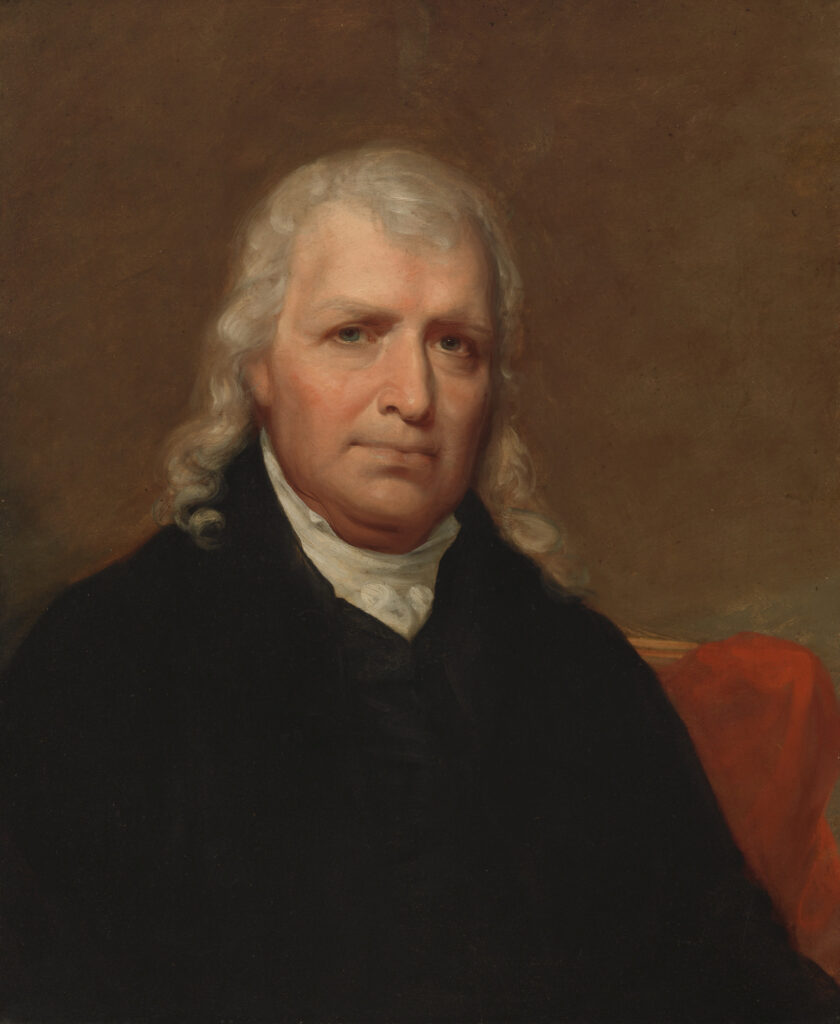
“If a man attempts to destroy the confidence of the people in their officers…he effectually saps the foundation of the government.” – U.S. Supreme Court Associate Justice Samuel Chase (1741-1811). Portrait from the National Portrait Gallery.
Today, we rely on the nation’s highest court to serve as the ultimate protector of our rights to freedom of speech and of the press.
A series of landmark cases during the 20th century provided the strong safeguards for freedom of speech and press that Americans enjoy today. In New York Times v. Sullivan (1964), the Supreme Court did away with seditious libel—the crime of criticizing the government. In fact, the Court ruled that public officials cannot be awarded damages even for defamatory statements that are false unless the official can prove what the Court called “actual malice”—that the speaker or writer knew the statements were false and published them anyway, or published them with reckless disregard for the truth. In reaching its decisions, the Court singled out the Sedition Act of 1798 as a dangerous act of government overreach, and cited James Madison’s argument that a free press does not mean a perfect press. “Some degree of abuse is inseparable from the proper use of every thing, and in no instance is this more true than in that of the press,” Madison wrote.
Given the Supreme Court’s modern history of defending First Amendment rights, you might wonder why the 18th-century Justices didn’t take up the issues raised by the Sedition Act of 1798. The law expired on its own in 1801, but why didn’t the Court exercise its power before then to strike it down based on its conflict with the First Amendment?
Nowhere does the power of judicial review appear in the Constitution. It would take until 1803, in Marbury v. Madison, for the Court to declare it had the authority to strike down unconstitutional laws. Even if the Justices did have that power while the Sedition Laws were active, it’s unlikely they would have used it to protect speech. On the contrary, Justices used the power they had to intensify punishment for sedition when they presided over trials under the Sedition Act, which they had the power to do at the time.
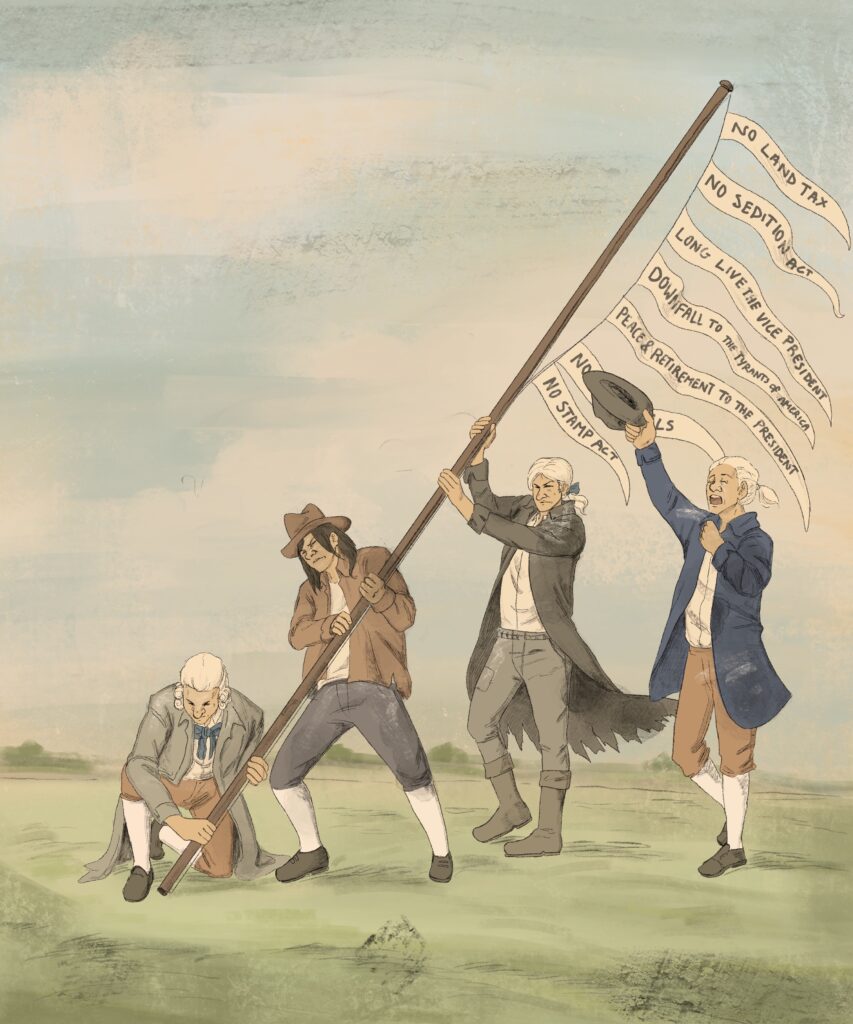
Take, for example, Associate Justice Samuel Chase’s treatment of David Brown, a poor drifter on trial in Boston for erecting a “liberty pole” with the words “No Stamp Act, No Sedition Act, No Alien Bills, No Land Tax, downfall to the Tyrants of America; peace and retirement to the President; Long Live the Vice President.” Though Brown pleaded guilty, Chase insisted on trying the case anyway. For his sign criticizing John Adams and the Sedition Act, and wishing a “downfall to the tyrants of America,” Chase fined Brown $400 and sent him to prison for 18 months, the harshest sentence for any Sedition Act defendant.
Discussion Questions
- How do you interpret James Madison’s statement that a free society must tolerate “some degree of abuse” on the part of the press? Do you agree or disagree?
- How might free speech and press rights be different if the Supreme Court did not have the power of judicial review of state and federal laws suppressing speech?
- Suppose that the First Amendment protections for freedom of speech and press had not been part of the Bill of Rights. How would you argue that these freedoms are implied by the Constitution’s creation of a republican form of government?
All told, more than two dozen individuals were prosecuted under the Sedition Act for exercising their First Amendment rights to freedom of speech and press. They included:
- Writers such as…
- James Thomson Callender—Journalist
- Offending words: “The reign of Mr. Adams has been one of continued tempest of malignant passions … the grand object of his administration has been to exasperate the rage of contending parties, to calumniate and destroy every man who differs from his opinions.”
- Where and how: Callender was a frequent critic of Adams and other Federalist leaders, in Philadelphia newspapers and in a series of pamphlets that were funded, in part, by Adams’ rival, Vice President Thomas Jefferson.
- Punishment: Nine months in prison and a $200 fine
- James Thomson Callender—Journalist
- Politicians such as…
- Matthew Lyon—Irish immigrant, U.S. representative from Vermont
- Offending words: “Unbounded thirst for ridiculous pomp, foolish adulation, and selfish avarice.” —In reference to Adams.
- Where and how: While seeking reelection to Congress, Lyon used these words to describe the President in a public letter for a Vermont newspaper. In speeches, he quoted a passage from Connecticut poet and activist Joel Barlow that Adams belonged in a “madhouse.”
- Punishment: Four months in prison and a $1,000 fine
- Matthew Lyon—Irish immigrant, U.S. representative from Vermont
- Agitators such as…
- David Brown—Drifter, gadfly
- Offending words: “No Stamp act; no sedition; no alien bill; no land tax. Downfall to the tyrants of America; peace and retirement to the President; long live the Vice President and the Minority.”
- Where and how: Brown put these words atop a “liberty pole” in Dedham, Massachusetts. During revolutionary days, liberty poles were a popular way to protest British authorities. By 1798, Federalists saw them as acts of sedition.
- Punishment: 18 months in prison and a $480 fine
- David Brown—Drifter, gadfly
James Madison’s Defense of a Free Press
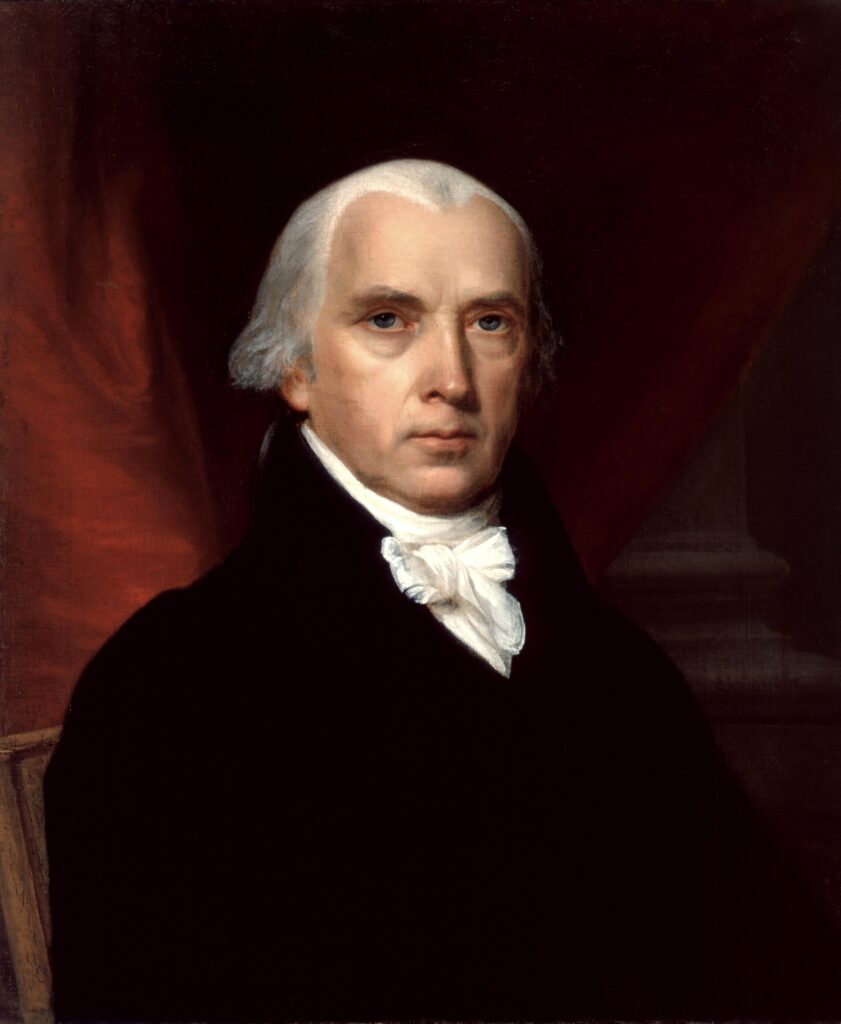
James Madison, author of the Bill of Rights, saw the Sedition Act of 1798 as a direct threat to democracy. For Madison, the United States was distinct from England because sovereignty, the ultimate power, rested with the people, not the government. In restricting the people’s right to freely examine public characters and measures, the Sedition Act struck at the heart of a nation built on the foundation of self-governance.
The Sedition Act motivated Madison to articulate a more expansive definition of freedom of the press than had been passed down by the British. In his Report to the Virginia House of Delegates, 1800, Madison argued that even the threat of seditious libel prosecutions would have the effect of favoring the incumbent Federalists, since the law criminalized only criticism of members of Congress and the President. Madison wrote, “Let it be recollected, lastly, that the right of electing the members of the government … depends on the knowledge of the comparative merits and demerits of the candidates for public trust; and on the equal freedom, consequently, of examining and discussing these merits and demerits of the candidates respectively.” By censoring public discussion of incumbents, Madison argued that the Sedition Act threatened free elections.
Madison explained, “What will be the situation of the people? Not free; because they will be compelled to make their election between competitors, whose pretensions they are not permitted by the act, equally to examine, to discuss, and to ascertain. And from both these situations, will not those in power derive an undue advantage for continuing themselves in it; which by impairing the right of election, endangers the blessings of the government founded on it?”
The Federalist law “subverts the general principles of free government,” Madison wrote. People must have the “right of freely examining public characters and measures.” Holding elected leaders to account in this way is “the only effectual guardian of every other right.”
When Madison looked back at the role of the press leading up to the American Revolution, he wrote, “Had ‘Sedition acts,’ forbidding every publication that might bring the constituted agents [government officials] into contempt or disrepute, or that might excite the hatred of the people against the authors of unjust or pernicious measures, been uniformly enforced against the press; might not the United States have been languishing at this day … possibly be miserable colonies, groaning under a foreign yoke?”
Specifically, he pointed out that criticism of government and public officials had been a criminal offense under the British seditious libel laws that governed the colonies. But all those who protested against British policy in America—writers, poets, cartoonists, newspaper publishers, and the wide swath of citizenry who participated in demonstrations—acted as if the laws did not exist. The laws were not enforced against the press because it proved almost impossible for officials to obtain indictments or convictions for seditious libel from Colonial juries.
“The practice in America must be entitled to much more respect,” Madison wrote. “In every state, probably, in the union, the press has exerted a freedom in canvassing the merits and measures of public men, of every description, which has not been confined to the strict limits of the common law. On this footing, the freedom of the press has stood; on this footing it yet stands.”
Discussion Questions
- Madison refers to the role of the press during the 10-year period leading to the Revolutionary War. How did he use this idea to argue against the Sedition Act of 1798?
- The American Constitution established a republican form of government. Why does this form of government require protection for the freedoms of speech and press, and specifically broad protection for criticism of government and public officials?
- Madison argues that freedom of speech and press is “the only effectual guardian of every other right.” Can you explain his meaning?
Activity
Ask students to read Madison’s Report of 1800 on the Virginia Resolutions and Henry Lee’s response.
- The two differ on half a dozen critical arguments about freedom of the press. Explain their disagreements. Which arguments do you find more persuasive?
- Have them write an essay comparing and contrasting the two documents. Do they agree or disagree with Jefferson’s argument that states can nullify unjust laws—potentially by disbanding the union?
Why the Defense of Truth Proved Ineffective
Federalists viewed their Sedition Act as enlightened and fair because it actually was more protective of speech than English law—it established truth as a defense against charges of seditious libel. Although English law on seditious libel began in 1275 with a requirement that criticism of the king and other leading men must be false in order to be actionable, the Star Chamber changed the law in 1606. The court eliminated the defense of truth—actually, truth was then seen as exacerbating the libel against the government by making it more difficult for officials to maintain the respect and good regard of the people. Such good regard was seen as necessary for the government to survive.
Since the Star Chamber ruling, a long line of libertarians writing about freedom of the press had argued that truth should be a complete defense against charges of seditious libel. After all, how could the government justifiably punish someone for telling the truth about public officials and public policy? As “Cato” argued in 1721: “The exposing therefore of publick wickedness, as it is a duty which every man owes to truth and his country, can never be a libel in the nature of things; and they who call it so, make themselves no compliment.” He continued: “Whoever calls publick and necessary truths, libels, does but apprize us of his own character, and arm us with caution against his designs.”
The Sedition Act of 1798, then, answered those calls by once again allowing truth as a defense to a charge of seditious libel for criticizing government officials, in this case President Adams or the Federalist-controlled Congress. But as the prosecutions commenced, James Madison and his Republican allies immediately saw that the defense of truth was almost useless in what amounted to political prosecutions. Why? Because people were being prosecuted for opinions that could not be proven true or false. Madison wrote in his Report of 1800 that “it must be obvious to the plainest minds, that opinions, and inferences, and conjectural observations, are not only in many cases inseparable from the facts, but may often be more the objects of the prosecution than the facts themselves; or may even be altogether abstracted from particular facts; and that opinions and inferences, and conjectural observations, cannot be subjects of that kind of proof which appertains to facts, before a court of law.”
Madison also pointed out that it was often difficult to prove truth to the high standards required by law when the burden fell on the speaker. As Madison wrote: “In the first place, where simple and naked facts alone are in question, there is sufficient difficulty in some cases, and sufficient trouble and vexation in all, of meeting a prosecution from the government, with the full and formal proof, necessary in a court of law.”
Madison’s point was evident in the prosecution of editor Thomas Cooper. At his trial, Supreme Court Associate Justice Samuel Chase (the same judge who sentenced David Brown in Boston) instructed the jury that Cooper would have to prove “to the marrow” every detail of his pamphlet criticizing the motives and actions of President Adams. Yet the Court denied Cooper’s attempts to call Adams and other Cabinet members as witnesses or to even subpoena government documents that Cooper felt would back up his opinions. Faced with an impossible task, Cooper asked the Court: “Have we advanced so far on the road to despotism in this republican country that we dare not say our President may be mistaken?”
The folly of “proving” opinions reached absurd levels during the Sedition Act trial in Vermont of U.S. Representative Matthew Lyon, who had accused Adams of “pomposity,” among other faults. In an effort to “prove” his accusation, Lyon called as a witness Supreme Court Associate Justice William Paterson, one of two judges presiding over Lyon’s case. Lyon asked Paterson whether Adams, his acquaintance and sometime dining companion, spoke pompously during dinner. Paterson assured Lyon that the President spoke with “plainness and simplicity.”
Discussion Questions
- Why did English law regard truthful libel of government as dangerous or even more dangerous than false libels?
- Do you agree with Madison that speech should be protected whether or not it can be proven to be true? Why or why not?
- Why might even accurate facts be difficult to prove in a court of law?
- Why is a defense of truth difficult to apply to political opinion? Is opinion capable of being proven true or false?
- What does Madison mean when he writes that opinions may actually be the “objects of the prosecution”? Why might public officials be fearful of opinions?
Efforts to Curb Dissent Backfires
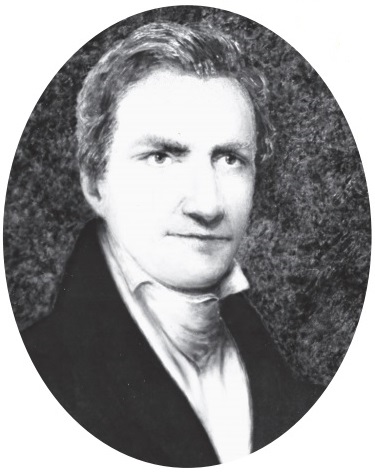
Black and white close up of section of Matthew Lyon portrait on display at Vermont State House. State House portrait painted in 1945 after a bequest by Zenas H. Ellis and based on an original owned by Ellis. Wikimedia Commons.
A combative, self-made industrialist who emigrated from Ireland in his teens, U.S. Representative Matthew Lyon of Vermont was among the harshest and most vocal critics of John Adams and Federalist legislators. Federalists hoped that by charging Lyon under the newly minted Sedition Act they might silence his voice forever and intimidate his supporters. Their plan backfired, spectacularly.
Fined $1,000 and sentenced to four months in prison for his criticisms of John Adams, Lyon served out his sentence in a drafty cell in Vergennes, Vermont. Writing from prison, Lyon continued to assail Federalists through the Scourge of Aristocracy, a newspaper started by his son. Far from destroying Lyon, the prison sentence made him a hero. Reelected from his cell in early 1799, Lyon finished his sentence, walked out of prison, and stepped into a carriage festooned with an American flag for the journey back to Philadelphia. The cheering crowds that waved him on his way signified a crucial turning point in the Sedition Act drama.
The Federalist party never recovered after losing the election of 1800. That year, they lost their majority in all three branches of government. In 1816, the last time a Federalist campaigned for President, the party lost to James Monroe, who won the electoral vote 183 to 34. Though Federalists had a lasting influence on the country’s court system, the party’s overall distrust of democracy—exemplified in the passage of the Sedition Act—had eroded the public’s support.
Discussion Questions
- As in the Sedition Act controversy, punishment of dissent in American history has often resulted in more dissent. How would you explain this when it might be assumed that the opposite would be expected?
- Do you recall other examples in American history when punishment of dissent served only to intensify protest? Consider, for example, the protests over civil rights and the Vietnam War in the 1960s and 1970s.
The Legacy of the Sedition Act
For all of the harm the Sedition Act visited on defendants, the greatest damage was to the Federalist party. By 1799, as Americans awoke, late but forcefully, to the specter of fellow citizens being arrested for exercising their rights, petitions bearing thousands of signatures landed on legislators’ desks, demanding an end to the Sedition Act.
As with many attempts throughout history to suppress speech, the Sedition Act achieved the opposite result. Matthew Lyon, Benjamin Franklin Bache, Luther Baldwin, Thomas Cooper, and others became martyrs and heroes, celebrated in the Republican press. Far from intimidating Republican journalists and newspapers into silence, the law emboldened new generations of opposition newspapers. In 1798, when the law was enacted, there were 37 Republican or Republican-leaning newspapers in the United States, according to Jeffrey L. Pasley’s The Tyranny of Printers. By 1800, the number had more than doubled, to 81.
The Republicans defeated John Adams in the election of 1800, though not without difficulty. While Thomas Jefferson won 61% of the popular vote, many state electors used a peculiar loophole in election rules to cast a vote for Jefferson’s running mate, Aaron Burr. This meant Jefferson and Burr had a tied number of electoral votes and the still Federalist-controlled House of Representatives was responsible for breaking the tie. Though they were no fans of Jefferson, a handful of Federalists voted in favor of Jefferson after Alexander Hamilton, a longtime enemy of Burr, persuaded them Jefferson was a safer bet.
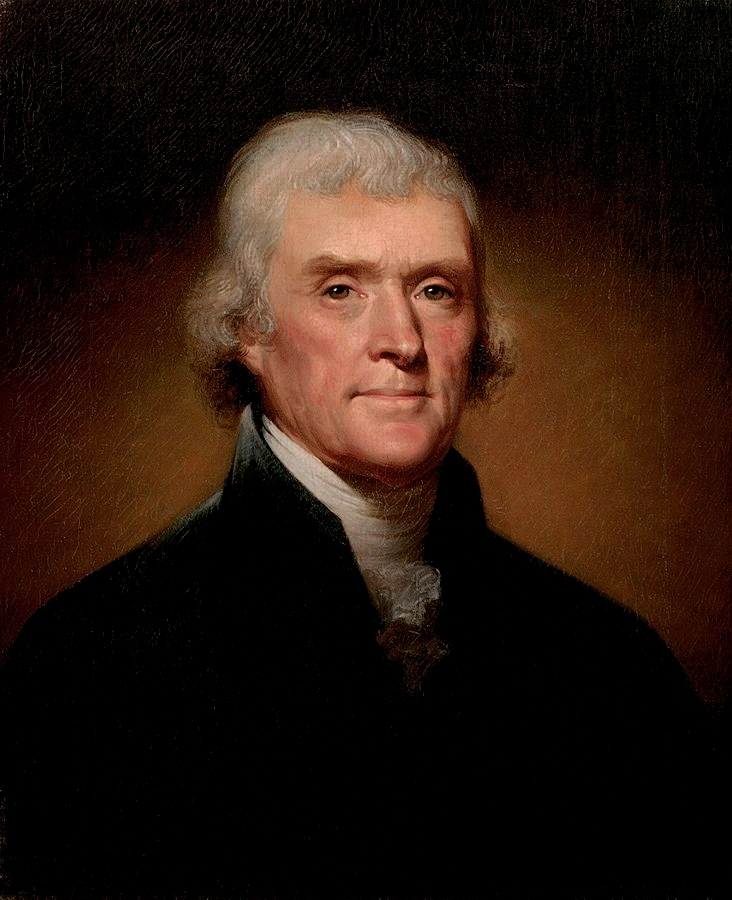
In his inaugural address Thomas Jefferson denounced the Sedition Act, and argued that a democracy should embrace public debate. Oil painting by Rembrandt Peale 1800. Wikimedia Commons.
In his inaugural address, Jefferson noted, famously, “And let us reflect that having banished from our land that religious intolerance under which mankind so long bled and suffered, we have yet gained little if we countenance a political intolerance, as despotic, as wicked, and capable of as bitter and bloody persecutions . . . [E]very difference of opinion is not a difference of principle. We have called by different names brethren of the same principle. We are all republicans: we are all federalists. If there be any among us who would wish to dissolve this Union, or to change its republican form, let them stand undisturbed as monuments of the safety with which error of opinion may be tolerated, where reason is left free to combat it.” Jefferson’s statement was not so much an entreaty for everyone to get along, but an acknowledgment that a free, democratic country must also, by necessity, be a fractious and messy one, with many contrary views.
The Supreme Court finally ended the debate over seditious libel in its landmark ruling in New York Times v. Sullivan (1964). Up until that point, many states continued to have libel laws that made it easy for public officials to win libel suits against their critics. When the Alabama police commissioner sued the Times for a few minor errors in a political advertisement, the Court saw it as a modern version of the Sedition Act of 1798 because the libel standard was met if the words published by the Times “would injure him in his public office.” Like the Sedition Act of 1798, the Alabama law used against the Times made it easy for plaintiffs to win a libel suit because the burden was on the alleged offenders to prove the truth of their assertions. In its decision, the Court applied the First Amendment to libel cases for the first time. It shifted the burden of proof onto plaintiffs to prove falsity and, in addition, required the plaintiffs to prove that the publisher knew or had good reason to believe the damaging statement was false before publishing it.
Echoing Madison’s Virginia Report of 1800, the Justices said the Sedition Act and its modern progeny were unconstitutional. In what is considered the central meaning of the First Amendment, the Court declared “a profound national commitment to the principle that debate on public issues should be uninhibited, robust, and wide-open, and that it may well include vehement, caustic, and sometimes unpleasantly sharp attacks on government and public officials.” The decision represents a sharp historic shift away from laws prohibiting any criticism of the government, to protecting even “vehement, caustic, and unpleasantly sharp attacks.”
The Sedition Act, which expired in 1801, was finally recognized by the Court in 1964 as having been a violation of freedom of speech and press. “Although the Sedition Act was never tested in this Court,” the Justices wrote, “the attack upon its validity has carried the day in the court of history.”
John Adams vs. John Adams
As a young lawyer in Colonial times, John Adams was a fierce defender of a free press and, especially, of the right of the people to openly criticize the controlling British authorities. In 1765, in a series of newspaper articles compiled as A Dissertation on the Canon and Feudal Law, Adams stated: “None of the means of information are more sacred, or have been cherished with more tenderness and care by the settlers of America, than the Press.” As such, he argued that “it should be easy and cheap and safe for any person to communicate his thoughts to the public.”
A few years later, in 1772, as he envisioned an independent republic that might replace British rule, Adams described holding powerful people accountable as a top priority. “The love of power is insatiable and uncontrollable,” he wrote in his private journals. “The only maxim of a free government ought to be to trust no man living with the power to endanger public liberty.”
Yet in 1798, as the second President of the United States, and feeling besieged by harsh criticism, Adams signed into law the Sedition Act, calling for fines and imprisonment for criticizing elected leaders—precisely what he had once described as crucial to the functioning of a free country.
The two quotes below from John Adams represent starkly different periods of his life. The first was written as a 30-year-old idealist. The second was written when Adams was a 63-year-old President feeling attacked by all sides.
1765
[Show portrait of Adams in his early 30s]
“The jaws of power are always opened to devour, and her arm is always stretched out, if possible, to destroy the freedom of thinking, speaking, and writing.”
— From A Dissertation on the Canon and Feudal Law
1799
[Show portrait of Adams from his presidential era]
“I have no doubt it is a libel against the whole government, and as such it ought to be prosecuted.”
— To Secretary of State Timothy Pickering, regarding a pamphlet by Pennsylvania printer Thomas Cooper, claiming that Adams had mismanaged the presidency, destroyed liberty, advanced tyranny and built up the military to intimidate Americans into submission.
.jpg)

Discussion Questions
- Adams goes from being a revolutionary to being President. Can you explain why someone outside of government could be much more protective of freedom of speech than someone holding public office? How might holding a position of power have changed Adams’ worldview?
- How do you think a President or leader should respond to criticism he or she believes is unfair or inaccurate? Where do you draw a line between criticism of the media and language that attacks and attempts to discredit the press as an institution?
Resources
Court Cases
New York Times v. Sullivan, 376 U.S. 254 (1964)
Historical Documents
James Madison, Report on the Virginia Resolutions (1800)
Henry Lee, Report of the Minority on the Virginia Resolutions
The Life of Representative Matthew Lyon of Vermont and Kentucky
Glossary
The Alien Acts were part of a series of four laws, including the Sedition Act, passed by the Federalist-controlled Congress in 1798. The laws raised residency requirements from 5 to 14 years, gave the President the authority to deport aliens, and permitted the arrest, imprisonment, and deportation of aliens during wartime.
The Federalist party was one of the first two political parties in the United States. It originated within the executive and congressional parties during George Washington’s first administration from 1789-1793. Federalists favored a strong central government that promoted economic growth, and were able to persuade Washington’s administration to create a central bank, pass tax laws, and assume national and state debts. The party held power from 1789 through 1801, and eventually petered out by 1824.
The Naturalization Act of 1790 was the nation’s first law that specified how foreign-born people could become U.S. citizens. “Any alien being a free, white person” could apply for citizenship as long as he or she had lived in the U.S. for at least two years, and in the state where the application was filed for at least one year. The law also guaranteed that children of U.S. citizens who were born in other countries would be considered natural born citizens.
The Sedition Act of 1798 made it a crime for Americans to “print, utter or publish … any false, scandalous and malicious writing” about the government. The Sedition Act was designed to suppress opposition speech. It prohibited criticism of the Federalist President Adams and both houses of Congress, each controlled by the Federalist party, but said nothing about the office of the Vice President, held then by Thomas Jefferson, who was a Republican. Critics who spoke out against the Federalists—including Matthew Lyon, a U.S. representative from Vermont, and journalist James Thomson Callender—were charged with seditious libel.