
On Aug. 25, U.S. District Judge David Hittner once again ruled that a Texas law restricting public drag performances is an unconstitutional infringement on freedom of expression.
The law, SB 12, sought to ban “sexually oriented performances” in public places, and applied to performances “on public property at a time, in a place, and in a manner that could reasonably be expected to be viewed by a child.”
Judge Hittner made his initial decision on the law’s unconstitutionality in September 2023.
“Not all people will like or condone certain performances,” Judge Hittner wrote. “This is no different than a person’s opinion on certain comedy or genres of music, but that alone does not strip First Amendment protection.”
In February of this year, the Fifth Circuit Court of Appeals decided the state could enforce the law and remanded the case back to the district court.
In reaffirming his 2023 decision, Judge Hittner ruled that the law is vague and overbroad, and could limit performances of all kinds. He cited concerns that “a single moment of eroticism could condemn an entire performance to criminal or civil penalties.”
We spoke with Brian Klosterboer, senior staff attorney at the American Civil Liberties Union (ACLU) of Texas, which litigated the case, about the decision. Klosterboer argued the statute imposes a prior restraint on protected expression, and described the state’s argument that drag is not protected speech as “dangerous.”
Watch the full interview below:
More on First Amendment Watch:
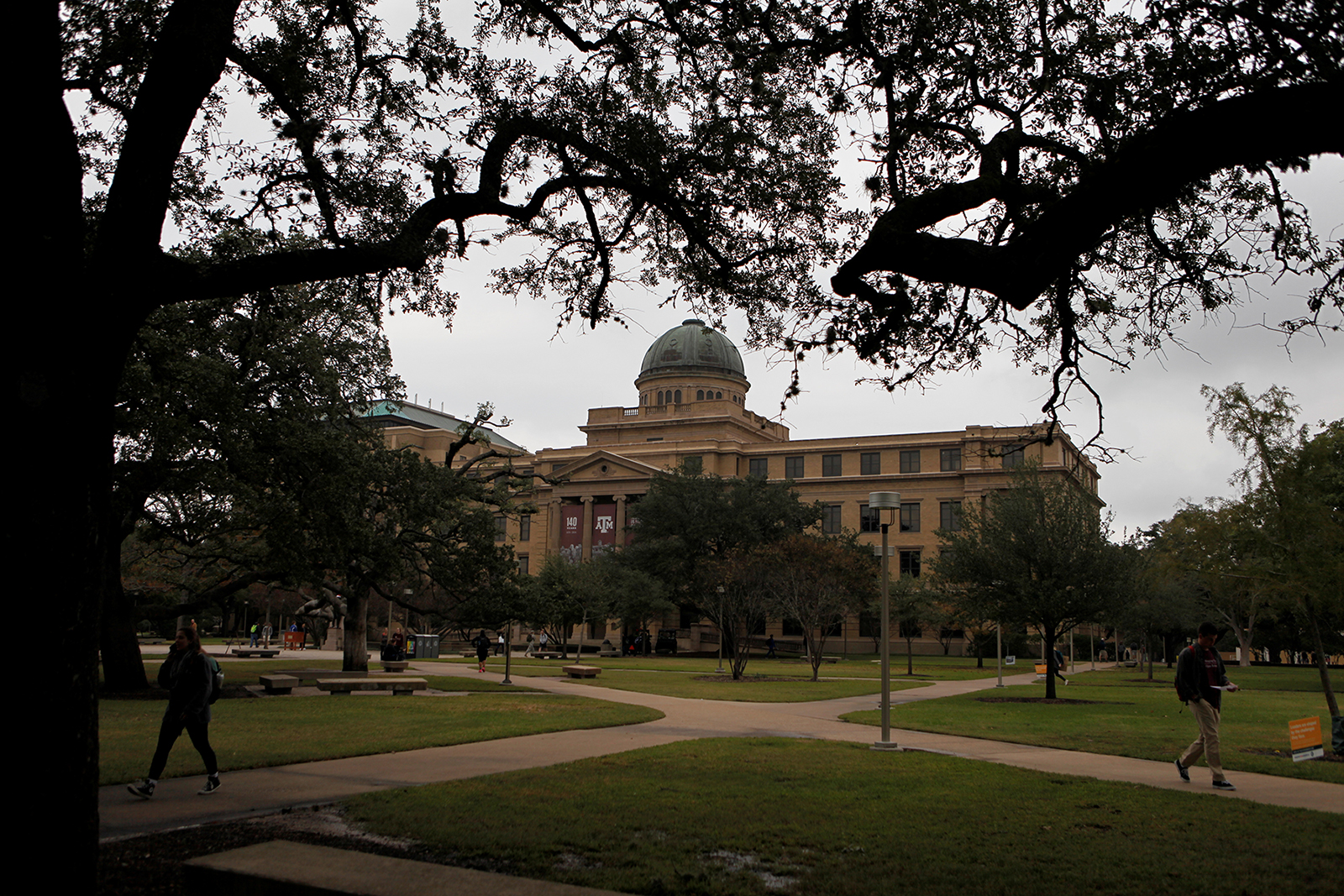
Appeals Court Clears Way for Texas Drag Ban To Take Effect in March Critics of the ban have previously raised concerns that Republican lawmakers were portraying all drag performances as inherently sexual or obscene. Judge Allows Drag Show at Texas A&M Despite the University’s Ban The ruling from Houston-based U.S. District Judge Lee Rosenthal blocked a university ban on drag performances on free speech grounds. Texas Drag Ban Declared Unconstitutional, Permanently Enjoined by Federal Judge A federal judge in Texas permanently enjoined the state’s law restricting public drag performances on Tuesday, declaring it an unconstitutional infringement on freedom of expression.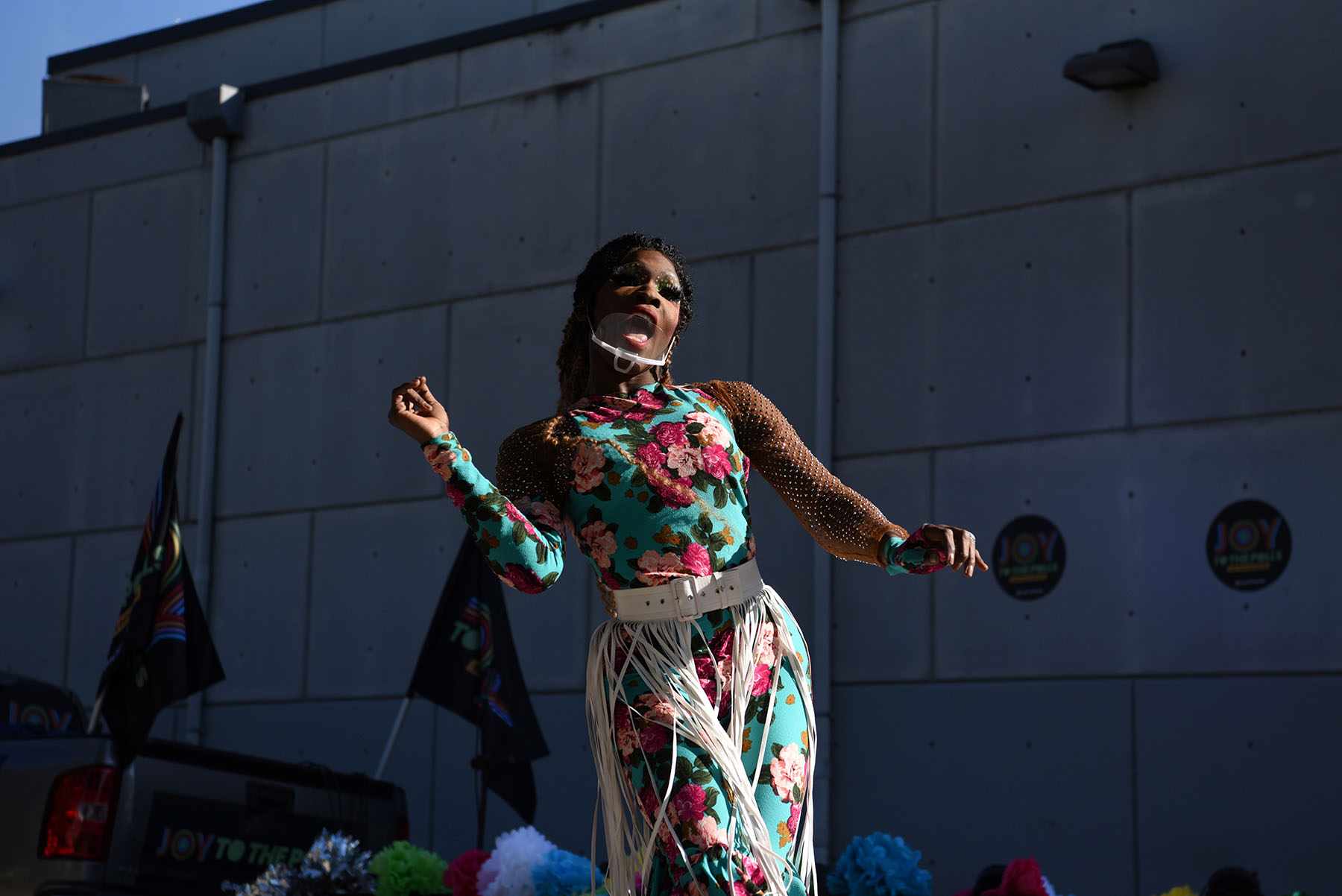
TRANSCRIPT:
Editor’s note: This interview has been edited for length and clarity.
Susanna Granieri: Today I’m speaking with Brian Klosterboer, attorney at the ACLU of Texas, about the Aug. 25 decision in which U.S. District Judge David Hittner, for the second time, found the state’s law restricting public drag performances an unconstitutional infringement on freedom of expression.
Susanna Granieri: For our viewers, what is the central issue in this case, and why is it important for us to hear about?
Brian Klosterboer: Back in 2023, we saw a wave of state laws trying to restrict and ban drag performances. So this case has continued since the fall of 2023, and we’ve also seen a few other cases across the country that have either been interpreted much more narrowly than actually being targeted at drag, or have been blocked by the courts. Our law, like the other laws, doesn’t actually name drag specifically, but Gov. Abbott, when he signed this into law, he celebrated what he viewed as banning all drag shows in public. This law doesn’t explicitly do that. It targets what it calls sexually-oriented performances, but it includes and defines those performances to include the “use of accessories or prosthetics to exaggerate male or female sexual characteristics,” which the district court found to be aimed at drag shows and drag performances. We blocked SB 12 from taking effect in 2023. It remained blocked for almost two and a half years. As the case went up on appeal, the Fifth Circuit Court of Appeals then sent the case back down to the district court, briefly allowing the law to take effect. And it said the district court needed to conduct more analysis on our legal claims. The district court did that, and now once again declared this law to be unconstitutional, so it is once again blocked.
Granieri: In his [U.S. District Judge David Hittner] ruling, he had expressed concern that SB 12, this law, could sweep in non-explicit performances with an audience, like cheerleading and dance competitions, or theater productions, or even “dressing in potentially provocative costumes at comic book conventions.” How does the First Amendment doctrine of overbreadth apply here? I know he listed these examples, but if you could tell us a little bit about how that was applied in his decision.
Klosterboer: Definitely. The Supreme Court has long made clear that the First Amendment protects all kinds of speech and performances, even if they involve sexual content. That governments can only restrict them if the content is obscene, or more recently, the Supreme Court clarified that if it’s obscene as to minors. That was in the Free Speech Coalition v. Paxton case from last year at the Supreme Court. The Supreme Court upheld a separate Texas law that required age-verification of certain websites. But importantly, in that case, the law at issue modified the three-part obscenity test that comes from Miller v. California, that governments have long been able to restrict content as obscene if it contains all three parts of the test. Here, the Texas law prohibits any performance that appeals to the “prurient interest” in sex. That language is cherry-picked from the Miller obscenity test, but our drag ban law, SB 12, doesn’t include any of the other requirements of the obscenity or obscenity as to minors test. It doesn’t even explain whose “prurient interest” we are talking about, simply any performance that could appeal to the prurient interest and meets the other elements of the statute would be banned. And that’s why the district court here said that even a performance by Dolly Parton or Elvis Presley thrusting or shaking his hips, that could be prurient to someone, and without those other guardrails that Miller and Free Speech Coalition require, any performance could be swept up and prescribed by this law, which is why it’s so overbroad and also vague.
Granieri: Yeah, absolutely, and I mean, I did have a question about the application of traditional, you know, Miller v. California obscenity standards here, and I know you were saying that the judge in his decision had found that it was not applicable, but was there a point in which the state attempted to prove that the performances can lack serious literary, artistic, or political value under the third prong of the Miller test, or was that not applicable in the proceedings of the case.
Klosterboer: Here, Texas has never defended this particular law under obscenity, or tried to say that I could even possibly meet the Miller test. Their stance on obscenity as to minors has changed a little bit over time, where now they’ve tried to at least insinuate that some drag performances could be obscene as to minors, but that, like, even we wouldn’t contest that, there could possibly be some show that would meet that test. But that would be a very specific, sort of as-applied example. Here, the law on its face prescribes any performance that features nudity, and nudity borrows a part of the Texas Business and Commerce Code that includes even any partial showing of any part of the butt or breast below the top of the areola, so someone who’s wearing a blouse with significant cleavage, or an Olympic swimmer whose speedo, you know, rides up, or there was testimony at the trial. had about performers wearing leotards, how they often reveal part of the butt. So, that kind of performer would be nude under this law, even though they’re still wearing clothes. And they could be swept up by SB12. So, the state didn’t even try to defend that those examples would be obscene, because, of course. You know, brief or partial nudity is ubiquitous in our society. It happens in stage performances, in movies and film, and even going back to the 1970s, the Supreme Court had cases like Erznoznik [v. City of Jacksonville]. That was about, like, an outdoor theater where there were films being shown that had brief or partial nudity, and the Supreme Court emphasized that, of course, just, like, nudity on its own is not obscene, and the state can’t ban something just because someone is showing, even something like the district court mentioned during our trial, like, the Jackson, like, Super Bowl performance. Like, wardrobe malfunctions are common as well. The state doesn’t have the power to criminalize a wardrobe malfunction in the performing arts, or else that would have a vast chilling effect on many types of performances throughout our society.
Granieri: That brings me to when Judge Hittner was concluding his ruling, he even pointed out, too, that,”for those who find such activities as described in this case offensive, the solution is relatively simple, just don’t go.” Why does First Amendment law refuse to let the reaction of an offended viewer dictate what speech is allowed in public, and how is that important to your case?
Klosterboer: These principles have endured over the decades. There’s a law from California, Brown v. Entertainment Merchants Association, where the California Democrat-controlled legislature tried to ban violent video games from minors. Justice Scalia wrote the majority opinion there, explaining that video games, like other types of art in our society, are fully shielded by the First Amendment. I think the most dangerous argument that the Attorney General in Texas has made regarding this law is that drag shows are not protected at all by the First Amendment. They’ve tried to say that drag is pure conduct that does not convey speech at all, that somehow it’s different from all Broadway shows and musicals.We had two amicus briefs here at the district court level, from the Dramatist Legal Defense Fund, and also Actors Equity Association, both of which have deep expertise in the performing arts, and talking about how gender expression has been part of stage performance since the days of Shakespeare and earlier, and how so many performances in our society could be restricted if the government could simply decide your genre, your type of performance is no longer protected at all by the First Amendment. That would set a very dangerous precedent. We’re glad the district court rejected that view in this case. There’s also two cases going en banc to the entire Fifth Circuit later this month in the Spectrum WT [v. Wendler] case, and also the Queer Empowerment Council v. Mahomes. Both of those come from Texas A&M University, which has tried to ban drag shows across what I think is the largest university system in Texas and one of the largest in the whole country. And similarly there, the Texas Attorney General is defending those drag bans, trying to say that drag is not protected at all by the First Amendment, which is a highly dangerous argument, because then the government could decide that slam poetry is not protected by the First Amendment, or rap music. And trying to kind of carve out, which the Supreme Court has consistently rejected governmental efforts like that, because while they’re trying to ban drag shows today, they could be trying to ban nativity scenes tomorrow, or certain types of prayer the next day. So, it just kind of creates this system where the First Amendment principles, like, our judge has been on the bench for a long time, has been applying these principles. We believe they are straightforward. And so even if this case continues at the Fifth Circuit, you know, we plan on defending this ruling. I think it’s very straightforward that SB 12 sweeps far beyond what the government may permissibly restrict, that it completely throws out the Miller obscenity test entirely, and the government really can’t just prohibit shows just because certain officials don’t like them.
Granieri: Yeah, absolutely, and it’s interesting that you bring up the case in Texas A&M, too. I mean, how might Judge Hittner’s ruling impact how those en banc hearings go? Does it have any sway in how these two cases are handled this month?
Klosterboer: I don’t know if it’ll have any sway, per se, but it does add to the significant body of cases. Like, the Ninth Circuit a few months ago also affirmed a preliminary injunction against the Montana drag ban, but there were actually two laws parallel in Montana that were blocked. So that creates more case law. Tennessee and Florida, those states both had their kind of drag bans very narrowly interpreted to really not have that much of an impact, but those states, both of those laws, like, more closely tracked the obscenity test. And so the courts found that it was within the state’s power to restrict performances that were so highly sexual that they actually met all three prongs of the Miller obscenity test, as adapted to minors in some cases, so we’ll see what the Fifth Circuit says, but, like, as I mentioned, I think that argument is highly dangerous, that the Attorney General is trying to say that drag shows categorically can be excluded from the First Amendment. As I mentioned, like, one could imagine, there could be a show that is obscene, just like any art form. If there’s an extremely raunchy Broadway musical, it could be considered someday obscene as to minors, but it has to meet those elements And importantly, there’s other First Amendment principles, like, that the government doesn’t ban speech in advance. It’s not supposed to impose a prior restraint before shows even occur, and so that’s one of the arguments in our case, as well as the A&M cases that here, government officials are trying to ban drag shows preemptively, instead of, like, if a performer performed in front of minors and actually was engaging in obscenity, there’s already Texas laws on the books that the government could then prosecute that person if they actually meet the obscenity standards.But here, the government is trying to stop speech even before it occurs, which is even more dangerous to our democracy and the First Amendment.
Granieri: Absolutely, absolutely, and seeing statutes like this that are overbroad and do sweep up this protected form of expression, and seeing those laws pop up in states across the country is concerning to all, you know, First Amendment advocates, and just You know, people every day, that want to not see any infringements on their right to free speech, But, Brian, thank you so much for taking the time to talk about this case with me, and we look forward to continuing to follow it if there’s any other appeals or other filings moving forward.
Klosterboer: Thank you so much!