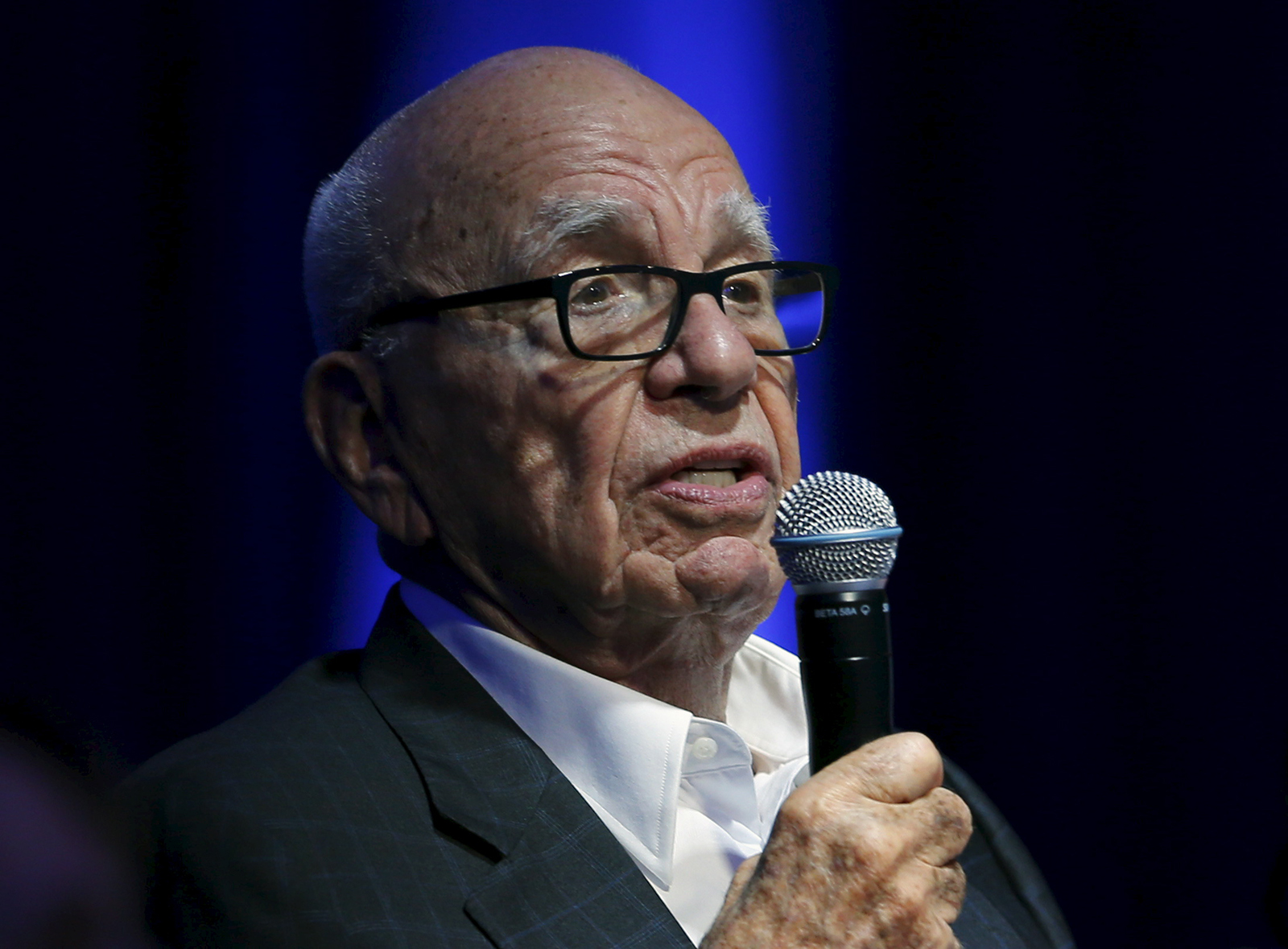
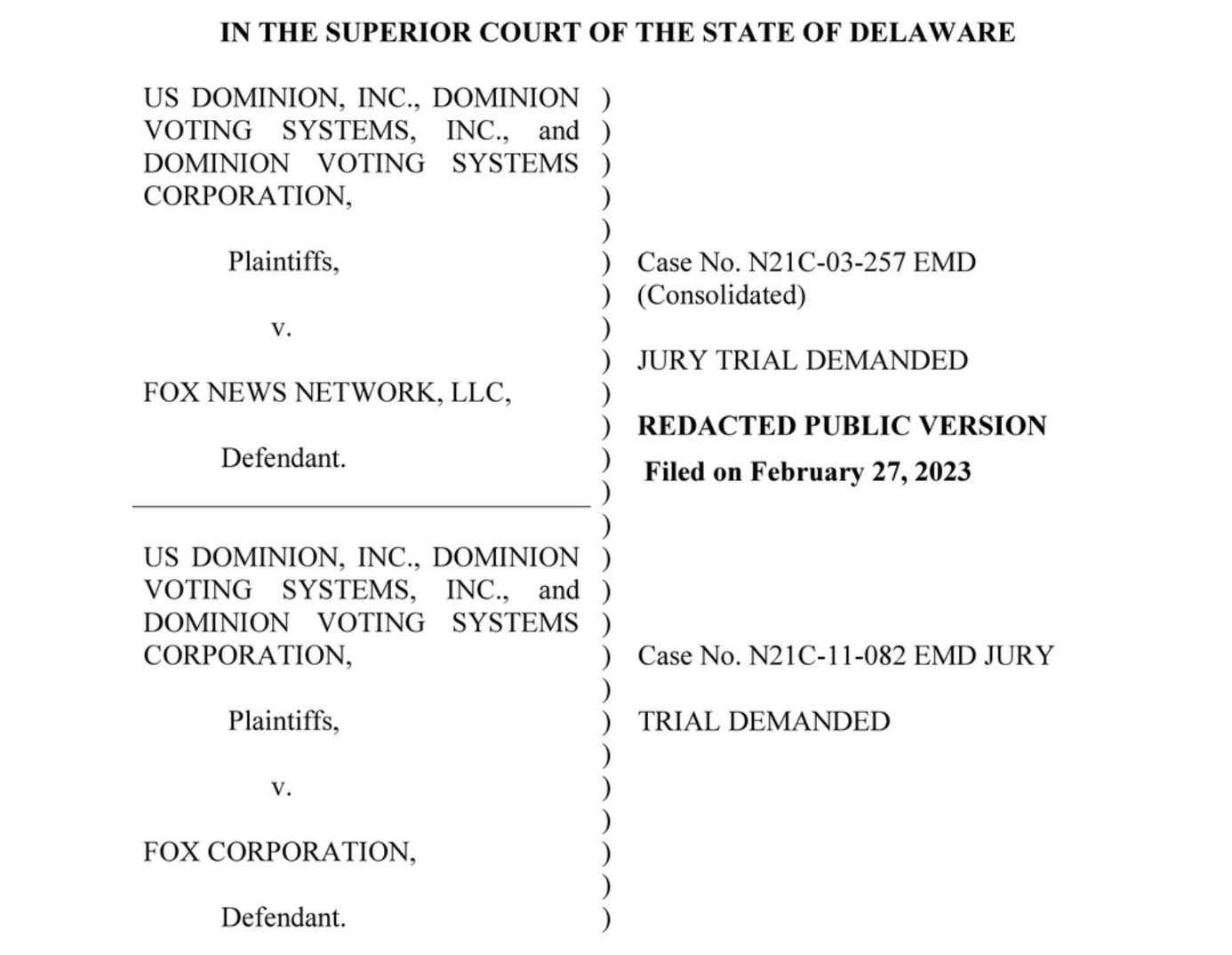
Rupert Murdoch’s Deposition Unsealed in Dominion v. Fox Defamation Suit
"To this day, Rupert Murdoch and Fox refuse to apologize for or retract the lies Fox News broadcast about Dominion, even though he [Murdoch] admits that 'I would have liked us to be stronger in denouncing it in hindsight' and that Fox hosts 'endorsed' the 'false notion of a stolen election,'" Dominion's filing stated.
Read More
TRANSCRIPT:
Editor’s note: This transcript has been edited for length and clarity.
Susanna Granieri (0:00): Today, I’m speaking with media law attorney Ian Rosenberg, adjunct professor at Brooklyn College, who has more than 25 years of experience specializing in First Amendment and libel law. We’re talking about his new book, “Terrible Stuff Damaging Everybody: The True Story of Lies and Libel in Dominion v. Fox, slated to publish September 1st by the NYU Press.
We’re here talking about “Terrible Stuff Damaging Everybody”: your new book that’s slated to come out September 1 in NYU Press. And so I was hoping you can start by just telling us a little bit about the Dominion v. Fox case, and why did you choose to write about this case and to do this narrative storytelling that we read in your book?
Ian Rosenberg: Well, thank you. I’m excited to talk about “Terrible Stuff Damaging Everybody.” And the reason I started thinking about writing this book was because at the time I was a lawyer for ABC News, and a colleague at ABC News texted me on the day of the Dominion v. Fox settlement — $787.5 million, the largest libel settlement in American history — and this friend texted and said, “Can’t wait to read your new book on this. And I laughed and said, “I didn’t have any book in the works!” But, I realized that this is not only really a compelling legal drama, but it has a lot to say about libel law and what that means for media, and really the future of democracy, and as somebody who has studied and worked in libel and news my whole career, as well as being a litigator earlier in my career, I felt like I had a unique lens on what this case not only meant, sort of day-to-day as each part of the trial unfolded, but also what it could mean bigger picture for where we are as a democracy.
Granieri (1:50): In “Terrible Stuff Damaging Everybody,” you told the story of the case using context from this mountain of internal Fox communications that were exposed during that trial’s discovery phase, and then the phrase “terrible stuff damaging everybody” is quoting Rupert Murdoch in part of that large set of conversations that was unsealed. How much more difficult was it for Fox to defend itself due to these internal discussions that really set the stage for your storytelling here?
Rosenberg: Absolutely. So there’s great reporting on this, and so many great reporters. But it was all coming out sort of day-to-day, and so unless you were really intensely watching it, it was hard to find a narrative throughline. And that’s one of the things I tried to do: is to take these thousands of pages of documents and all of the excellent reporting and weave a story together. And yes, you hit on the crux of Fox’s problem. Normally, a libel lawsuit is going to be proved by implication or outstanding information that people potentially didn’t know at the time to sort of prove something was false. But here, there was overwhelming internal evidence that even Fox’s own commentators, some of the commentators who were putting on guests, like Rudy Giuliani and Sidney Powell, espousing these lies, some of those own commentators and journalists, and certainly some of the executives such as Rupert Murdoch believed internally that this was false, so you have an extraordinary amount of internal evidence. In fact, so much so that if I saw this in like a docudrama movie, I would be like, “That’s never the way a libel case happens. That’s so exaggerated!” But it is that extraordinary, and the quote from where the book gets its title that you brought up is, in full: “… Terrible stuff damaging everybody. I fear probably hurting us too,” and this is from Rupert Murdoch’s email to Fox News CEO Suzanne Scott as he was watching Rudy Giuliani’s infamous press conference on Nov. 19, 2020, the one with the hair dye coming down his face. And what it reveals, besides I think being a really strong title that captures the drama of this case, is that even Rupert Murdoch, the highest level person at all of the Fox News company, realized that this was terrible stuff, not true, and it was hurting them. And why? What does that acknowledgement mean that it’s hurting Fox? It means he knew that Fox was culpable in spreading these false statements. It wouldn’t hurt Fox if they were just innocently reporting something that everyone else had reported and not endorsed it. And in fact, Rupert Murdoch, in his deposition, which is a devastatingly bad deposition, which I go into in the book, he sort of shockingly, acknowledged and admitted that a number of Fox News hosts were endorsing these allegations, not just repeating them, which had been Fox’s main defense.
Granieri: You hit the nail on the head there too on how the ins and outs of the conversations that were happening internally, plus the endorsements on top of everything else, and Rupert Murdoch in the position that he held, having this discussion at all really did pin down the discussion. A lot of times, like you mentioned before, with libel and defamation claims, it’s kind of difficult sometimes to find if a reasonable person would have assumed or acted in a reckless disregard for the truth, and here it was evident through the messages that were read as part of that unsealed filing.
Rosenberg (5:47): You’re absolutely right, and I think that says a lot about one of the themes of the book that I try to unspool is that people, even people at Fox News, even sophisticated people who are aware of the law, are very confused by the libel standards that we have in this country. And one of the things that the book tries to show is one, to explain what libel really means in modern practice, and two, that if this isn’t libel, then there really are no restrictions. This is a point that one of Dominion’s lawyers made, Davida Brook, that otherwise, without this being sort of a standard of what is libel — Ari Melber calls it “textbook libel”— without that, there would just be this race to the bottom. There would be no incentive or check on people saying the most scandalous and shocking and sensationalist thing that might draw eyeballs. And so the meaning of why the libel standard needs to provide a check on false statements that people are either knowingly saying or knowing falsity or reckless disregard to the truth — that’s not some abstract principle that doesn’t have any meaning. It’s not just an ivory tower Supreme Court phrase. It really protects the news media in normally being such a strong defense, but also protects them in the other way of saying, without this standard, without this requirement, everything will just be a race to the bottom.
Granieri (7:23): Some critics have called for the Supreme Court to revisit or to overturn New York Times v. Sullivan‘s actual malice standard, arguing that it makes it too hard to hold the press accountable. But what struck me is that you wrote that “Fox’s efforts to cloak itself in the protective garment of Sullivan was an awkward fit,” and that “to essentially claim that amplifying government propaganda should be given the same First Amendment breathing room as criticizing the government is turning the intent of Sullivan on its head.” That really struck me as a powerful way of describing how the Dominion v. Fox case fits into the larger discussion of actual malice and what that means for the news media in 2026 and moving forward. Can you tell me a little bit more about that, and your thought process behind framing it that way?
Rosenberg: Sure. Well, and as I know you know, but just for viewers, the name of the actual malice standard is misleading. What it really means is you need a false statement of fact that is being said either that is knowingly false, so a lie, or with reckless disregard for the truth, that you’re sort of refusing to look at evidence that’s right in front of you, and there’s a lot of evidence about that. But you also point out the great irony of Fox trying to hold on to this defense, which was their only potential defense, and the irony is that, as you point out, the libel standards, the actual malice standards, which comes from the case <i “>New York Times v. Sullivan, have been under attack by conservatives for years, and primarily Justice Thomas, also Justice Gorsuch to a more limited degree. But they have been advocating that the Supreme Court take up the Sullivan standard and overturn it for years, and sort of Gorsuch’s argument is indeed, as you point out, that well, we can’t hold the media accountable. It’s just too impossible. The standard protects everyone. It’s essentially a blanket indemnity. And what this case shows, and why I think it was always foolish of Fox and its general counsel Viet Dinh, although he’s a brilliant guy, I always thought it was foolish for them to think that the Supreme Court would save them in the future because this case actually proves how the standard is necessary, and this case shows conservatives trying to hold on to it, and this case also shows that the media could be held accountable. So in many ways, it was, as I mentioned in the book, a sort of terrible fit, both for Fox as a defense and something for even conservatives to want to bring to the court. This was not the case that was going to overturn Sullivan, and Fox should have known that and inexplicably never really took that into consideration until the last minute.
Granieri (10:17): You did also write that it was important to acknowledge how defamation law, like you’re saying, can be used to “fight against the media,” but that it also can be used as a “legal tool to fight disinformation.” And so I felt like that was another layer to it here. And you add that “Just because a hammer can be used as a weapon does not mean that it can’t also nail down the truth.” How would you define political disinformation, kind of more broadly, and within this case, and how do you use defamation law to fight back against that?
Rosenberg: Well, that’s the toughest question that comes out of this book, but I do think it’s sort of counter traditional narrative. The traditional narrative, which I normally subscribe to, is that libel lawsuits come against the media, and that in general the media should be protected, and that we have such strong protections in Sullivan because we want a robust discourse, particularly about political subject matter. But I do think it’s important to realize that I believe, and I think the evidence shows that in this case, libel was being used as a tool to get at the truth. That what’s fascinating about Dominion, one of the things — I find it all pretty fascinating — but one of the things that’s so important and fascinating about the Dominion decision or the Dominion case is that even though there were many lawsuits brought by the Trump administration or Trump surrogates to try and fight and claim electoral fraud or claim voting fraud, and those all failed. But when they failed, the courts were always saying these cases are dismissed because there’s not enough evidence. But in this case, we have the only single finding from a court that the claims put on Fox News, but also just these sort of bedrock election fraud claims were false, and we have the the judge in the case saying that it was crystal clear that those statements are false, and so the only thing that was going to go to trial was whether the libel actual malice standard had been met, but the falsity of this voting fraud had already been determined, and so that is the way that this case was really most clearly a vehicle for truth in the moment and in the among the parties. But also I think in the sort of broader question of our democracy is that we have this ruling from a judge who was very carefully looking through all of the evidence and said “this is false” and it’s the only court recognition of that and that has historical value and it has value for us today as President Trump continues to say, like most recently in his primetime address, that election fraud is real and something that we have to fight against. And this case is really the most succinct counter to those claims.
Granieri (13:11): You did add that President Trump and his second administration has been attempting to “rewrite history,” and that the Dominion v. Fox case is this “immovable obstacle in their path to change [in which they cannot change] the truth,” because it is that finding that it was found to be false. No matter what, a court had made that distinction in this case. And since this case was settled and it had that historic $787.5 million dollar price tag on it, we didn’t get to see a final decision from a judge. How are you able to conclude that this is so impactful in the future of libel litigation without the judge’s order and decision against Fox as an organization? And does this settlement amount impact the further news gathering of you know other media organizations in the future?
Rosenberg: Good questions. So first of all, I think that the $787.5 million, as the Dominion plaintiffs’ lawyers said, it speaks for itself. And what’s unusual, and we have to sort of recognize, and I talk about in the book a lot, is that normally settlements are confidential. That money probably changed hands, but we never usually know how much, and people can speculate, but that’s all just that, speculation. Here Dominion absolutely made it a requirement of the settlement that that number be known, and they said that that number was more powerful than any sort of faux apology. There were a lot of complaints from the liberal media, particularly talk show hosts like Stephen Colbert and Jimmy Kimmel, that this is just a sellout that they never got the admission or the apology from Fox that some people were looking for, but I think the number speaks for itself. I think no one, even the unbelievably wealthy coffers of Fox News and Rupert Murdoch, nobody puts forward $787.5 million, just because they think that the underlying judge is a little off base. I believe that that is an admission. I think that a lot of the story has been now revealed in my book. Some stuff that didn’t sort of make it fully to light at the time of the case, and I don’t believe, as some very intelligent critics would argue, that because we never got a jury verdict ultimately that therefore this case sort of was a bust in terms of what it means for the the future or as a precedent. I still think that this is a very powerful precedent. I talk about that a lot in the book, both in the legal context and then also sort of what I think it means for the news media and democracy. And just to answer your specific question about what does it mean for the news media, while in general, verdicts against the news media I do think have a chilling effect, I think here in this case, and people may disagree with me, but I think here in this case, Fox has been chastened, and whether or not this is a huge impact on their overall bottom line, given how much money they make, I explore theories about that in the book, but I think that they have been chastened, and I think that if you look at Fox’s reporting on Trump’s primetime allegations, you will see that it is not the cheerleading that Fox normally engages in with what the president says, but instead is much more circumspect. And I believe that even Fox has taken a second look at overt false statements, particularly about election fraud. But I would argue, even in other contexts in the future, and do make those arguments in the book. And so I think this actually has a really positive impact on the overall media ecosystem.
Granieri (17:23): As an adjunct associate professor at Brooklyn College, how has this case impacted how you teach and view modern day democracy? How do you relay what it looks like now versus what it looked like before the Dominion case?
Rosenberg: Well, I think it’s a great book for classrooms. It is a great book for teaching because there has certainly not been such a recent libel case like this one. But there also hasn’t been a case that so clearly lays out: What is the standard? How does the standard get applied in real contemporary journalism? And then what does the application of that standard mean for the political world we are in, with accusations of voter fraud and what that means for democracy? And also sort of just accusations about the “lying media” in general. So I think this case, I think it can be read even if you’re not in a classroom. But I also think it really works beautifully as a teaching guide without being written as a textbook. But telling the story, I think, gives people an understanding of how libel law works and how the news media works today.
Granieri (18:44): The Dominion case, as you’re aware, is not the only one that was active at the same time against Fox. And so, I did want to ask you about how Dominion and the Smartmatic cases are related, and if you can give us a little context about that, and where does that stand currently? How does the Dominion case’s settlement impact how the Smartmatic case is litigated as a result?
Rosenberg: Well, what’s so interesting is it doesn’t seem to have changed the way Fox is continuing to litigate the case, and I talk about it at the end of the book about how that doesn’t make a lot of sense, because essentially the lies about Dominion are the same lies that were being also put forward against Smartmatic, another voting company that had much less impact on the election, in the sense that they were really only in one place in California, so a lot less reach. So mostly the litigations are the same, and so you know the definition of insanity is when you keep doing the same thing again and getting a result you don’t like. It does seem very strange. There is an asterisk that there have been allegations and charges brought against Smartmatic regarding bribery in obtaining contracts internationally. I don’t go into that in great detail because really I just wanted to focus on one case, and I can’t really do two. There’s so much to cover. But those bribery allegations, which Smartmatic deny and which they claim are retaliation by the the Trump administration for their arguably anti-Trump position, and there’s a lot of back and forth about if is that a valid distinction. The charges against Smartmatic were investigated. It should be noted, starting under the Biden administration, but have been only brought forward during the Trump administration. So that’s an asterisk. That case is still ongoing. It’s interesting that the Dominion case wrapped up in two years, and we are still looking at the Smartmatic case, still not having a trial date, moving forward, but still not having a trial date. So it’ll be fascinating to see how that plays out. I think that ultimately Fox is going to have to settle that case too. But like with Dominion, it seems like it may not happen until the very last minute.
Susanna Granieri (21:25): Well, thank you. I look forward for when the book comes out for everyone to be able to get a glimpse into the storytelling behind this fascinating narrative of a case that I think, 10 years ago, nobody would really expect to be at the grand level that it was, and getting to really see the inner workings of Fox’s communications and how it was impactful on kind of the ecosystem of how our country now navigates democracy and attitudes toward voting. It’s pivotal when looking back at the history books. It’s been so great talking to you about this. I really appreciate you taking the time and joining us to tell us a little bit more about your book.
Rosenberg: It’s been great fun, and I love First Amendment Watch. So thanks for having me.