 Ronald Collins is a retired law professor, author, and co-founder of the History Book Festival and The Washington Independent Review of Books. His book commentaries and reviews have appeared in The Washington Post and the Los Angeles Review of Books, among other publications. His next book, due out this September, is “Common Sense in the Age of Trump: A Republic if We Can Keep it” (with Russ Huxtable, Amy Marasco, and Paul Sparrow).
Consider this: The First Amendment protects a communication technology — the press. It wasn’t just the institution of the press that was safeguarded, but also the machinery behind the production of expression. This technology led to printed books. Since Gutenberg’s invention of the press in 1440, the printing revolution has driven change throughout the societies it reached. The demand for Bibles and political writings fueled the rapid growth of printing. Yet, as the reach of the printing press expanded and its books and pamphlets challenged authority, censorship also became common, making the protection of communication technologies crucial.
There is the law, and then there is the spirit of the law, especially the Press Clause of the First Amendment. In other words, protecting book publishing and the culture of books is an aspirational goal of the First Amendment. Therefore, while those who control communication platforms have the right to operate them freely, it is hoped that they do so in ways that support the broader goals of press freedom and the marketplace of ideas. This includes strengthening our book culture, especially as book bans become more common. By this standard, there is something very troubling about Jeff Bezos’ recent decision to terminate The Washington Post’s Book World. Let me explain why.
Book reviews and their importance
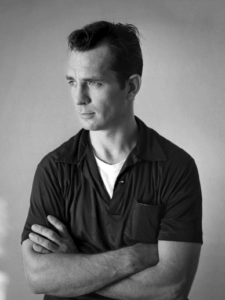
Jack Kerouac by photographer Tom Palumbo, 1956, via Wikimedia Commons, CC BY-SA 2.0.
His 1957 novel transformed culture and altered literary history. Jack Kerouac’s “On the Road” was a cultural milestone; it sold millions of copies. Even today, tens of thousands of copies are sold each year on Amazon and in bookstores. Despite Kerouac’s many talents, his novel might have gone largely unnoticed if not for a groundbreaking book review by Gilbert Millstein. That review propelled Kerouac and his “beat generation” novel into the corridors of lasting fame.
With the opening line of his critique of “On the Road,” Millstein declared the work of remarkable importance. “Its publication is a historic occasion,” he stated. After examining the book’s sociological and psychological aspects, he commended its style: “The writing is of a beauty almost breathtaking.” He then quoted what would become the novel’s famous lines: “The only people for me are the mad ones, the ones who are mad to live, mad to talk, mad to be saved, desirous of everything at the same time, the ones who never yawn or say a commonplace thing, but burn, burn, burn like fabulous yellow roman candles.”
Millstein’s review was part of a broader American tradition, one that began in the newspaper world on Oct. 10, 1896, when, under the leadership of Adolph S. Ochs, The New York Times published “The Saturday Review of Books and Art.” It was the first such review published as a regular piece in a standalone section of a newspaper. Other notable reviews include Richard Wright’s 1940 New Republic review of “The Heart is a Lonely Hunter” by Carson McCullers and James Baldwin’s 1976 New York Times review of Alex Haley’s “Roots.”
Writing in 2021, Noor Qasim observed: “What has followed, over the subsequent 125 years, is an evolution of literary journalism — reviews, news, essays and interviews that have shaped the course of American letters.”
The Washington Post’s “Book World,” launched in 1972, was one of many papers that followed in that literary tradition. Sadly, “Book World” ended abruptly in February of this year owing to widespread layoffs at the Post. Why is its closure so important, and what does it suggest for the future of books and our literary culture?
Discovery, discussion, and debate
Discovery has always been the central challenge in publishing. — Greg Greeley (2026)
Book culture has long been a vital part of American history. Consider Tom Paine’s “Common Sense” (1776), a work that helped launch the American Revolution. Then think of Harriet Beecher Stowe’s “Uncle Tom’s Cabin” (1852), F. Scott Fitzgerald’s “The Great Gatsby” (1925), Harper Lee’s “To Kill a Mockingbird” (1960), and William Styron’s “The Confessions of Nat Turner” (1967). These books, among others, deserved widespread attention, though sometimes it took time and effort to rediscover. That is where book reviews come in.
Recently, Greg Greeley, Simon & Schuster’s new chief executive, told The New York Times that “helping the right readers discover the right books is increasingly important.” Indeed. In that sense, book reviews, bookstores, and book discussion groups are all part of the fabric of American culture – they are also engaging components of the First Amendment’s five freedoms. To support them is to advance the cause of that Madisonian guarantee. After all, the First Amendment is not simply the work of lawyers and judges; it is also about what we do with it . . . and that “we” includes newspaper publishers such as Mr. Bezos.
Last month, the Politics and Prose Bookstore in Washington, D.C. hosted a tribute to Book World. “As book sellers,” said co-owner Bradley Graham, “the loss of the book section of the Post hits particularly hard.” It is not only “a blow to the literary world,” he added, “but it leaves a further cultural void in our alarming eroding democracy.” Former writers and contributors to Book World gathered at that “cultural oasis,” as co-organizer Marie Arana tagged the bookstore. They did so “to honor Book World’s phenomenal run and mourn its passing.” For her, it represented a “profound sense of loss” combined with “no little rage.” That sentiment was eloquently echoed by the speakers who followed, including John Williams, Carlos Lozada, Rita Dove, Michael Dirda, Warren Bass, and Ron Charles. Time and again, they astutely emphasized the importance of book reviews as a critical component of our book culture. In many profound ways, it embodied a form of dissent that truly aligns with the spirit of the First Amendment.
Thankfully, publications like The New York Review of Books, Publishers Weekly, Kirkus Reviews, The Los Angeles Review of Books, and the Washington Independent Review of Books exist. But, important as they are, they are the outliers.
“We are the comeback people”?
As people feel less of a need to keep up with new books, they stop reading reviews; publications respond by cutting book coverage, so readers don’t hear about new books; as a result, they buy fewer books, which makes publications think they’re not worth covering. — Adam Kirsch (2026)
Despite the despair expressed at the Politics and Prose event, there was a glimmer of idealized hope, one spoken by Bob Woodward. “The loss of Book World is awful,” he protested. “What happened to the Washington Post,” he emphasized, “is . . . tragic. The old motto is that ‘when things are down, think of the comeback.’”
His self-described “catastrophic” tendencies notwithstanding, the acclaimed investigative journalist took an optimistic turn: “How do we fix this? I think we will someday. Of course, this is our country and democracy. Put a smiley face on the future. Can’t describe it, can’t figure out who will do it, but we are the comeback people.”
Maybe. Then again, realism demands its due. It was a sign of the times: Last year, The Associated Press stopped doing book reviews. The decision reflected a shift toward content that generated more web traffic. And some, like Ron Charles, were far less optimistic than Woodward: “For book critics, getting laid off is practically a rite of passage — usually the last rite of the final passage.”
Don Quixote to the rescue
If hope springs eternal, the question is how and why? That is the challenge facing those who value our book culture. Know this: It is a culture under economic attack from everything from book bans to artificial intelligence (see here also) to the demise of newspaper book reviews. Or as Arana put it: “We find ourselves battling book bans, the trivialization of truth, and the bashing of serious journalism. And now The Washington Post, once one of the most respected journalistic institutions in America, is enduring a mass demolition like no other.”
Will Mr. Bezos step up and reconsider his decision, and what it means for our First Amendment culture? Perhaps, but don’t hold your literary breath. Meanwhile, the seeds of a Don Quixote-like hope stir in the soil.
Tags